
Have you ever noticed an EMS symbol on an ambulance, medical uniform, first aid kit, or emergency sign and wondered what it actually means? You’re not alone. Many people recognize the symbol but don’t know the story behind it or why it’s used around the world.
The EMS symbol represents emergency medical care, rapid response, and lifesaving services. While it may look simple, every part of the design has a specific meaning tied to medicine, healing, and patient care.
In this guide, you’ll learn what the EMS symbol means, where it came from, why it’s important, how it’s used today, and how to recognize the difference between the EMS symbol and other medical symbols.
Featured Snippet
The EMS symbol usually refers to the Star of Life, a blue six-pointed star containing the Rod of Asclepius. It represents emergency medical services, including emergency response, patient care, transportation, and lifesaving treatment. The symbol is recognized internationally as the official emblem of emergency medical care.
What Is the EMS Symbol?
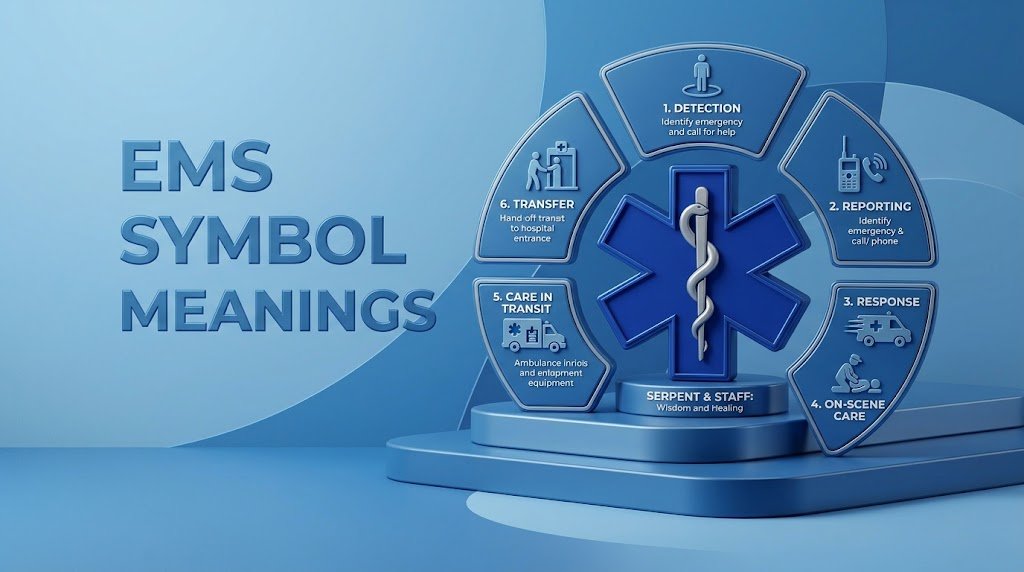
The EMS symbol is the internationally recognized sign for Emergency Medical Services (EMS). In most countries, the official EMS emblem is the Star of Life, a blue six-pointed star with a white border and the Rod of Asclepius in its center.
The symbol tells people that trained emergency medical professionals are available to provide urgent care before and during transportation to a hospital.
You might see the EMS symbol on:
- Ambulances
- Emergency response vehicles
- EMT and paramedic uniforms
- Medical helicopters
- First responder equipment
- Hospital emergency entrances
- EMS training materials
- Public safety signs
Whenever you see this symbol, it indicates a service or professional connected to emergency medical care.
What Does the EMS Symbol Mean?
The EMS symbol stands for fast, professional medical assistance during emergencies.
Its overall meaning includes:
- Emergency response
- Patient assessment
- Immediate medical treatment
- Safe transportation
- Lifesaving care
- Professional emergency medicine
Unlike general healthcare symbols, the EMS symbol specifically represents medical professionals who respond to emergencies outside hospitals and continue caring for patients while transporting them to appropriate medical facilities.
In simple terms, the symbol tells the public:
- Help is available.
- Medical professionals are trained for emergencies.
- Patients will receive care before reaching the hospital.
- Emergency treatment follows established medical standards.
The Official EMS Symbol: The Star of Life
The Star of Life is the official symbol used by many emergency medical organizations worldwide.
6
It was created to provide one clear symbol that people could instantly recognize during emergencies.
The design contains two important elements:
| Element | Meaning |
|---|---|
| Blue six-pointed star | Emergency medical services |
| Rod of Asclepius | Medicine and healing |
Together, these elements communicate that emergency medical professionals are trained to deliver lifesaving care.
What Does Each Part of the Star of Life Mean?
Many people focus only on the star, but each feature carries its own meaning.
The Six Points of the Star
The six points represent the six traditional responsibilities of emergency medical services.
| Point | Responsibility |
|---|---|
| 1 | Detecting the emergency |
| 2 | Reporting the incident |
| 3 | Responding quickly |
| 4 | Providing care at the scene |
| 5 | Caring for the patient during transport |
| 6 | Transferring the patient to advanced medical care |
These six stages describe the complete journey from the moment someone calls for help until the patient reaches definitive treatment.
The Blue Color
Blue is commonly associated with:
- Trust
- Professionalism
- Calmness
- Safety
- Reliability
In emergency medicine, the color also helps distinguish EMS services from other emergency organizations.
The White Border
The white outline represents clarity, protection, and visibility. It makes the symbol easier to recognize on emergency vehicles, uniforms, and equipment.
The Rod of Asclepius
At the center of the symbol is the Rod of Asclepius—a staff with a single snake wrapped around it.
This ancient symbol has represented medicine for thousands of years and remains one of the most widely accepted medical emblems in the world.
The snake symbolizes renewal because it sheds its skin, while the staff represents healing and medical practice.
History and Origin of the EMS Symbol
The EMS symbol has a relatively modern history, even though its central medical emblem dates back to ancient Greece.
The Rod of Asclepius comes from Asclepius, the Greek god of healing. According to Greek tradition, temples dedicated to Asclepius served as places where people sought medical treatment and recovery. Over time, his staff became the enduring symbol of medicine.
Centuries later, emergency medical systems expanded rapidly as ambulance services became more organized. A single, recognizable symbol was needed to identify legitimate emergency medical providers.
The Star of Life was developed during the 1970s and became the official symbol for emergency medical services in the United States. Its simple design made it easy to recognize from a distance, and many countries later adopted or adapted it for their own EMS organizations.
Today, the symbol is recognized worldwide and appears on countless emergency medical vehicles and facilities.
Why the EMS Symbol Is Important
During an emergency, every second matters.
The EMS symbol provides instant visual recognition that trained medical responders are nearby or that emergency medical equipment is available.
Its importance includes:
- Helping people quickly identify emergency medical services.
- Building public trust during stressful situations.
- Standardizing emergency medical identification.
- Improving communication across different regions.
- Supporting faster emergency response.
Whether someone is at a sporting event, airport, highway, school, or public festival, spotting the EMS symbol can help them find emergency medical assistance without confusion.
EMS Symbol vs. Other Medical Symbols
Many medical symbols look similar, which often leads to confusion.
The table below highlights the key differences.
| Symbol | Appearance | Represents | Common Use |
|---|---|---|---|
| Star of Life | Blue six-pointed star with Rod of Asclepius | Emergency Medical Services | Ambulances, paramedics, EMS agencies |
| Rod of Asclepius | Single snake around one staff | Medicine and healthcare | Medical organizations and healthcare professionals |
| Caduceus | Two snakes around a winged staff | Historically associated with Hermes; commonly used by some organizations, especially in the U.S. | Some medical logos, military medical departments |
| Red Cross | Red cross on a white background | Humanitarian and disaster relief services | Emergency aid, disaster response, humanitarian work |
One of the most common misconceptions is confusing the Rod of Asclepius with the Caduceus. Although both feature snakes, the Rod of Asclepius has one snake and no wings, while the Caduceus has two snakes and a pair of wings. Historically, the Rod of Asclepius is the symbol most closely associated with medicine.
Where You’ll Commonly See the EMS Symbol
Once you know what it looks like, you’ll notice the EMS symbol in many everyday places.
Common locations include:
- Ambulances and rescue vehicles
- Fire department medical units
- Air ambulance helicopters
- EMT and paramedic uniforms
- Automated emergency response stations
- Emergency departments at hospitals
- First aid rooms at schools and workplaces
- Medical supply cases
- Public event medical tents
- Emergency preparedness materials
Its consistent appearance helps people quickly identify emergency medical resources when time is critical.
How EMS Professionals Use the Symbol
The EMS symbol is more than a logo. It serves as an official identifier for trained emergency medical personnel and approved emergency medical services.
You may see it displayed on:
- Ambulance doors and rear panels
- Paramedic and EMT uniforms
- Medical response bags
- Cardiac monitors and trauma kits
- Emergency communication materials
- EMS training manuals
- Public education campaigns
Displaying the symbol helps the public quickly recognize legitimate emergency medical responders and equipment.
The Role of EMS in Saving Lives
Emergency Medical Services are often the first link in the healthcare system when someone experiences a serious medical emergency.
EMS professionals respond to situations such as:
- Heart attacks
- Strokes
- Car accidents
- Falls
- Severe allergic reactions
- Breathing emergencies
- Poisonings
- Traumatic injuries
Their responsibilities include assessing patients, providing immediate treatment, stabilizing injuries, monitoring vital signs, and transporting patients safely to the most appropriate medical facility.
Without EMS, many patients would face longer delays before receiving lifesaving care.
What the EMS Symbol Represents Beyond Emergency Care
Although the symbol is closely tied to emergency response, it also reflects broader values shared by EMS professionals.
These include:
- Compassion for patients
- Commitment to public safety
- Teamwork under pressure
- Professional medical training
- Rapid decision-making
- Service to the community
For many paramedics and EMTs, the symbol also represents pride in a profession dedicated to helping people during some of the most difficult moments of their lives.
Psychological Meaning of the EMS Symbol
Symbols can influence how people feel, especially during stressful situations.
The EMS symbol often creates a sense of reassurance because it signals that trained medical help is available.
Psychologically, many people associate it with:
- Safety
- Hope
- Relief
- Trust
- Protection
- Competence
Seeing the symbol on an ambulance or medical responder can reduce uncertainty and encourage people to seek help more quickly during an emergency.
Cultural Recognition Around the World
The Star of Life is widely recognized, but its use can vary from country to country.
In many places, it appears on ambulances, emergency response uniforms, and public medical facilities. Some countries use additional national symbols alongside it, while others rely on different healthcare emblems for certain organizations.
Despite these differences, the Star of Life has become one of the most recognizable international symbols for emergency medical care.
Is There a Spiritual or Biblical Meaning?
Some people wonder whether the EMS symbol has a spiritual or biblical meaning because of its ancient roots.
Historically, the Star of Life was created as a modern symbol for emergency medical services. It was not designed with a religious purpose.
The Rod of Asclepius comes from ancient Greek mythology, where Asclepius was associated with healing. This is a historical and cultural origin rather than a biblical one.
From a Christian perspective, the Bible does not mention the Star of Life or the Rod of Asclepius as official religious symbols. Some Christians simply view the work of EMS professionals as an expression of compassion and caring for others, while others avoid attaching spiritual meaning to the symbol itself.
It’s important to distinguish between:
| Perspective | Understanding |
|---|---|
| Historical | The Rod of Asclepius originated in ancient Greek medicine. |
| Cultural | The symbol has become a global sign of emergency medical care. |
| Biblical | The Bible does not identify the Star of Life as a Christian symbol. |
| Personal belief | Individuals may associate EMS work with service, kindness, or healing based on their own faith. |
Common Misunderstandings About the EMS Symbol
Several misconceptions continue to circulate about the EMS symbol.
It Means Any Medical Service
Not exactly.
The Star of Life specifically represents Emergency Medical Services, not every healthcare provider or medical facility.
It Is the Same as the Red Cross
No.
The Red Cross represents humanitarian assistance and disaster relief, while the Star of Life identifies emergency medical services.
The Snake Represents Danger
This is a common myth.
In medical history, the snake symbolizes healing, renewal, and wisdom—not harm.
Every Blue Medical Symbol Is an EMS Symbol
Many healthcare logos use blue, but only the official Star of Life with the Rod of Asclepius represents EMS.
Practical Tips for Recognizing the EMS Symbol
Knowing how to identify the symbol can help you respond more confidently during emergencies.
Look for these features:
- A blue six-pointed star
- A white border around the star
- A single staff with one snake in the center
- Placement on ambulances, emergency equipment, or paramedic uniforms
If you’re unsure whether a service provides emergency medical care, the presence of the official EMS symbol is often a reliable indicator.
Frequently Asked Questions
What does EMS stand for?
EMS stands for Emergency Medical Services, the network of trained professionals who provide emergency medical care before and during transportation to a hospital.
What is the symbol with a blue six-pointed star?
It is the Star of Life, the internationally recognized symbol for Emergency Medical Services.
What does the snake on the EMS symbol mean?
The single snake represents healing and renewal through the ancient Rod of Asclepius, a long-standing symbol of medicine.
Is the EMS symbol used worldwide?
Yes. While some countries also use national medical emblems, the Star of Life is widely recognized as the symbol of emergency medical services around the world.
Why does the EMS symbol have six points?
Each point represents one stage of emergency medical response: detection, reporting, response, care at the scene, care during transport, and transfer to advanced medical treatment.
Can businesses use the EMS symbol?
In many countries, the Star of Life is protected and intended for authorized emergency medical organizations. Commercial use may be restricted, so businesses should check local regulations before displaying it.
Is the EMS symbol the same as the medical symbol?
Not exactly. The EMS symbol includes the Rod of Asclepius but specifically identifies emergency medical services rather than healthcare in general.
Why is the Star of Life blue?
Blue is associated with trust, professionalism, and visibility. It also helps distinguish emergency medical services from other emergency response organizations.
Is the Caduceus the correct EMS symbol?
No. The official EMS symbol uses the Rod of Asclepius. The Caduceus is a different emblem featuring two snakes and wings.
What should you do if you see the EMS symbol during an emergency?
If the symbol marks an ambulance, first aid station, or emergency medical team, it indicates that trained responders are available. Follow instructions from EMS personnel and call 911 immediately if emergency medical assistance is needed.
Conclusion
The EMS symbol is much more than a familiar design on an ambulance. It represents a coordinated system of emergency medical care that begins the moment help is needed and continues until a patient reaches advanced treatment. From the six points of the Star of Life to the ancient Rod of Asclepius, every element reflects the mission of protecting life, delivering skilled care, and responding when every second counts. Understanding what the EMS symbol means makes it easier to recognize trusted emergency medical services and appreciate the professionals who serve communities every day.
Discover more post
What Does Toyota Symbol Mean? 2026
What Does Symbol Mean in Poetry? 2026
What Does the Jewish Hand Symbol Mean? 2026

Mark Twain is a seasoned content writer and digital media expert with 5+ years of experience producing insightful, reader-first content across the web. He specializes in decoding symbols, text abbreviations, emojis, internet slang, Unicode characters, and evolving digital communication trends. As a core contributor at SymbolSignn, Mark is committed to publishing thoroughly researched, accurate, and easy-to-follow content that helps readers quickly understand modern online language. His expertise in SEO and user-focused writing allows him to transform complex topics into engaging, practical guides. By staying ahead of emerging internet trends, Mark ensures every article delivers reliable information, exceptional value, and an enjoyable reading experience for a global audience.